
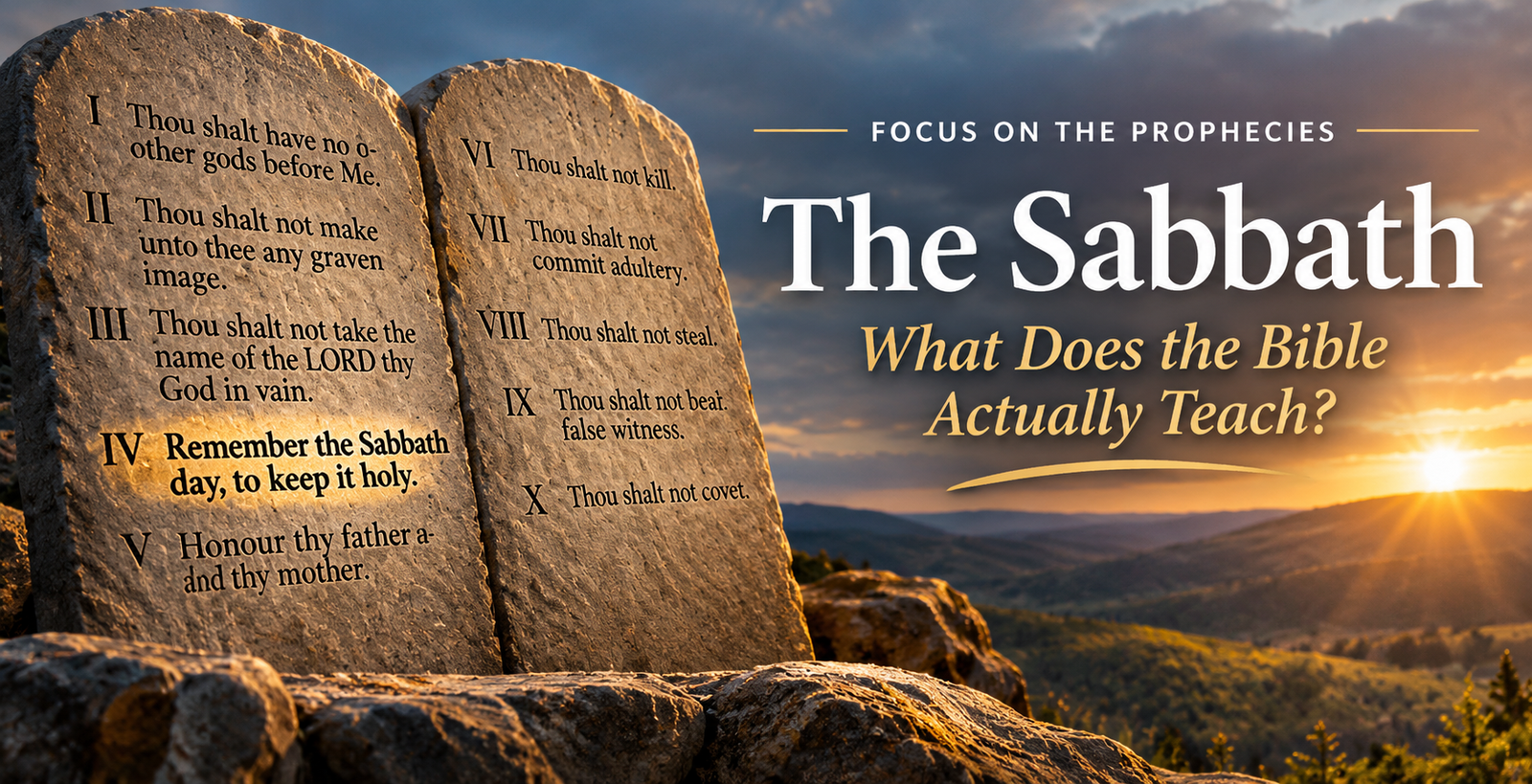
The Sabbath
What Does the Bible Actually Teach?
An Interesting Conversation with Artificial Intelligence
By Kevin R. Swift
For centuries, Christians have debated which day of the week should be observed as the Sabbath. While most Christians today worship on Sunday, others continue to observe the seventh day, Saturday, as identified in the Ten Commandments.
I recently listened to a sermon by Christian minister Alistair Begg entitled Sabbath Controversy, in which he addressed the conflict between Jesus and the religious leaders of His day over Sabbath observance.
Although I discovered the Sabbath in my early 20's with the decision to honor it, his message prompted me to conduct an interesting experiment. Rather than consulting the writings of a particular denomination or religious organization, I decided to present my questions to ChatGPT, an artificial intelligence system.
Unlike a human theologian, ChatGPT has no personal religious upbringing, denominational membership, personal religious convictions, or church tradition of its own to defend. Although its training reflects a broad range of human writings and interpretations, I wanted to see how it would evaluate the biblical and historical evidence.
My objective was straightforward: What does the Bible itself establish concerning the Sabbath, and what evidence exists that God ever changed the day He originally blessed and sanctified?
The following presents my questions and ChatGPT's responses, organized and lightly edited for publication.
The Sermon That Prompted My Questions
Alistair Begg — Sabbath Controversy
Scripture: Mark 2:23–28 and Mark 3:1–6.
In his sermon, Begg examines the controversy between Jesus and the Pharisees regarding Sabbath observance. He distinguishes between God's purpose for the Sabbath and the man-made restrictions that had distorted it.
Among the central teachings of the sermon:
- The Sabbath was established for humanity's benefit.
- Jesus is Lord of the Sabbath.
- Religious traditions had distorted God's original purpose.
- Doing good on the Sabbath is lawful.
- Obedience is a response to salvation, not a means of earning it.
Jesus corrected the abuse of the Sabbath rather than abolishing the Sabbath itself.
This understanding raises an important question: If Jesus did not abolish the Sabbath, where does Scripture authorize changing the day of its observance?
Listen to Alistair Begg's SermonCan you find the scripture(s) that clearly change Sabbath from Saturday to Sunday?
There is no verse in the entire Bible that explicitly changes the Sabbath from the seventh day (Saturday) to the first day (Sunday).
There are, however, several New Testament passages that Christian theologians traditionally use to justify Sunday worship. The important distinction is whether these passages actually authorize a change in God's commandment or simply describe activities that occurred on the first day of the week.
1. The Original Sabbath Commandment

Established at Creation
Genesis 2:2–3 establishes the sanctification of the seventh day at Creation, long before the establishment of the Jewish nation.
God rested on the seventh day, blessed it, and sanctified it.
The Genesis account does not record a specific verbal Sabbath instruction to Adam and Eve, but it explicitly records God's blessing of the seventh day.
And God blessed the seventh day, and sanctified it: because that in it he had rested from all his work which God created and made.
Genesis 2:3
The Ten Commandments
Remember the sabbath day, to keep it holy. Six days shalt thou labour, and do all thy work: But the seventh day is the sabbath of the LORD thy God.
Exodus 20:8–10
The commandment specifies the seventh day, rather than simply one day out of seven.
2. Scriptures Used to Support Sunday Observance
| Scripture | What the Passage Establishes |
|---|---|
| Matthew 28:1–6 | Jesus' resurrection was discovered on the first day. No change in the Sabbath is commanded. |
| John 20:19 | The disciples assembled behind closed doors for fear of the Jews. No Sabbath observance is mentioned. |
| Acts 20:7 | The disciples gathered to break bread on the first day. Paul preached until midnight. No new Sabbath was instituted. |
| 1 Corinthians 16:1–2 | Paul instructed believers to set aside money for the saints on the first day. No command to worship or rest is given. |
| Revelation 1:10 | John refers to the Lord's Day but does not identify which day of the week it was. |
| Colossians 2:16–17 | Paul addresses judgment concerning religious observances, including Sabbaths. He does not transfer the Sabbath to Sunday. |
| Romans 14:5–6 | Paul addresses individual convictions concerning the observance of days. He does not identify Sunday as a new Sabbath. |
These passages form much of the traditional theological argument for Sunday observance. However, the transfer itself is an inferred theological conclusion rather than an explicit biblical instruction.
3. Evidence Supporting the Continuation of the Seventh-Day Sabbath
Following the Crucifixion
And they returned, and prepared spices and ointments; and rested the sabbath day according to the commandment.
Luke 23:56
Luke explicitly distinguishes the Sabbath from the first day of the week in the following chapter.
Jesus Looking into the Future
But pray ye that your flight be not in the winter, neither on the sabbath day.
Matthew 24:20
Jesus anticipated the Sabbath remaining relevant at a time following His earthly ministry.
Paul's Ministry to the Gentiles
In Acts 13:42–44, the Gentiles requested that Paul preach to them the following Sabbath. Nearly the entire city subsequently gathered to hear the Word of God.
Paul's Customary Practice
And Paul, as his manner was, went in unto them, and three sabbath days reasoned with them out of the scriptures.
Acts 17:2
The Remaining Sabbath Rest
There remaineth therefore a rest to the people of God.
Hebrews 4:9
The Greek word translated as rest here is sabbatismos, which denotes Sabbath rest or Sabbath observance. Theologians differ over whether this refers to weekly observance, spiritual rest in Christ, or the ultimate rest awaiting God's people.
The New Heavens and the New Earth
And it shall come to pass, that from one new moon to another, and from one sabbath to another, shall all flesh come to worship before me, saith the LORD.
Isaiah 66:22–23
4. What Do the Churches Officially Teach?
The Westminster Shorter Catechism of 1647, which reflects traditional Reformed Protestant theology, declares that the Sabbath changed to the first day following Christ's resurrection. It references passages including Genesis 2:2–3, Acts 20:7 and 1 Corinthians 16:1–2 in support of its teaching.
The Catholic Church likewise associates Sunday observance with Christ's resurrection and apostolic tradition.
Other Christian denominations maintain that the Sabbath commandment is no longer binding under the New Covenant, rather than claiming that it was transferred to Sunday.
These are three distinct theological positions.
5. ChatGPT's Biblical Assessment
When examining Scripture alone, I cannot find a single passage in which:
- God removes His blessing from the seventh day.
- God sanctifies the first day of the week.
- Jesus instructs His disciples to observe Sunday as the Sabbath.
- An apostle commands Christians to rest on Sunday.
- The Sabbath commandment is amended to designate the first day.
- Sunday is explicitly identified as the Sabbath.
There is biblical evidence for Christians gathering on the first day of the week. But gathering for worship on a particular day is not the same as God sanctifying that day as the Sabbath.
Acts 2:46 even describes believers gathering daily.
If Jesus corrected the abuse of the Sabbath rather than abolishing it, by what explicit biblical authority was the day that God blessed and sanctified at Creation subsequently changed?
The New Testament contains theological grounds from which Christians have inferred Sunday observance, but it contains no explicit divine command authorizing that transfer.
In weighing the scriptural evidence, and the desire to follow its collected writings, plus the historical evidence prior to any Christian writers proposing it's been changed, what day would be best to observe?
In weighing the biblical evidence, the historical record, and a sincere desire to follow the authority of Scripture above subsequent ecclesiastical traditions, I would conclude that the seventh-day Sabbath—Saturday, observed from Friday sunset to Saturday sunset—has the strongest scriptural foundation as the day to observe.
My conclusion rests on the following considerations.
1. God Established the Sabbath at Creation
Three significant things occurred in Genesis 2:2–3:
- God rested on the seventh day.
- God blessed the seventh day.
- God sanctified the seventh day.
This occurred before Abraham, before the Jewish nation, and before the giving of the law at Mount Sinai.
2. God Incorporated It into the Ten Commandments
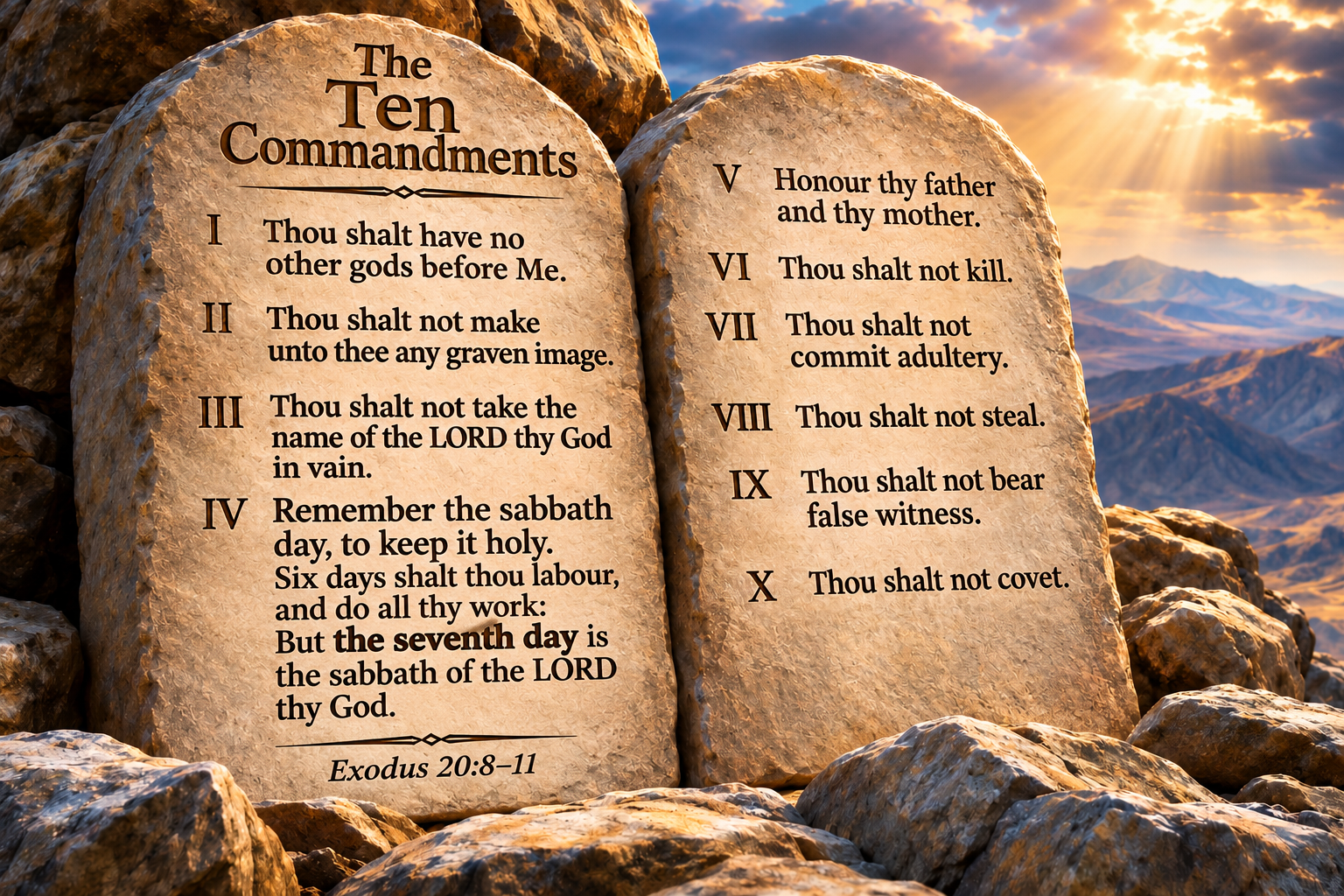
Exodus 20:8–11 identifies the seventh day as the Sabbath and specifically connects its observance to Creation.
Unlike commandments dealing with particular sacrifices or ceremonial rituals, the Sabbath commandment appears within the Ten Commandments.
There is no subsequent biblical declaration transferring the blessing or sanctification of the seventh day to another day.
3. Jesus Observed and Defended the Sabbath
And, as his custom was, he went into the synagogue on the sabbath day, and stood up for to read.
Luke 4:16
The sabbath was made for man, and not man for the sabbath: Therefore the Son of man is Lord also of the sabbath.
Mark 2:27–28
Jesus described the Sabbath as having been made for humanity. As Alistair Begg pointed out in his sermon, Jesus corrected the abuse of the Sabbath rather than canceling its use.
4. The Apostolic Record
The New Testament records Sabbath observance and Sabbath gatherings after Christ's resurrection.
| Scripture | Historical Significance |
|---|---|
| Luke 23:56 | Christ's followers rested according to the commandment. |
| Acts 13:42–44 | Gentiles gathered to hear Paul on the Sabbath. |
| Acts 16:13 | Paul sought a place of prayer on the Sabbath. |
| Acts 17:2 | Sabbath preaching was Paul's customary practice. |
| Acts 18:4 | Paul reasoned with Jews and Greeks every Sabbath. |
| Hebrews 4:9 | A Sabbath rest remains for the people of God. |
Although these passages do not individually establish a universal command for Christians to observe Saturday, collectively they demonstrate the continued significance of the seventh-day Sabbath during the apostolic era.
5. The Historical Development of Sunday Observance
It is important to distinguish the biblical record from subsequent Christian writings and governmental decrees.
God blesses and sanctifies the seventh day.
The seventh-day Sabbath is incorporated into the Ten Commandments.
New Testament records describe Sabbath gatherings and some first-day gatherings, without an explicit transfer of the Sabbath.
Early Christian writings, including those associated with Ignatius of Antioch and the Epistle of Barnabas, increasingly distinguish Christian worship practices from Jewish Sabbath observance. The interpretation and dating of some early references are debated.
Justin Martyr explicitly describes Christians assembling on Sunday in his First Apology, Chapter 67, connecting the day with Creation and Christ's resurrection.
Constantine issues a civil Sunday rest decree, with certain exceptions, including agricultural work.
Canon 29 discourages Christians from resting on the Jewish Sabbath and encourages honoring the Lord's Day.
Sunday worship clearly predates Constantine. Nevertheless, its historical development does not establish that God Himself transferred the Sabbath's sanctity to Sunday.
6. Weighing the Competing Evidence
| Biblical Consideration | Saturday | Sunday |
|---|---|---|
| Explicitly blessed by God as a day | Yes | No |
| Explicitly sanctified by God | Yes | No |
| Identified in the Ten Commandments | Yes | No |
| Identified in Scripture as the Sabbath | Yes | No |
| Observed by Jesus as the Sabbath | Yes | No |
| Apostolic gatherings recorded | Yes | Yes |
| Associated with the discovery of Christ's resurrection | No | Yes |
| Explicit divine command identifying the day as the Sabbath | Yes | No |
Christians who worship on Sunday have theological reasons for doing so, particularly the resurrection of Jesus and their understanding of the New Covenant. Others believe Christians are no longer obligated to observe any particular day as the Sabbath.
However, neither position establishes an explicit biblical transfer of the Sabbath from Saturday to Sunday.
ChatGPT's Conclusion
If I were approaching this question without denominational allegiance, inherited religious traditions, or preconceived theological commitments, and my primary objective was to identify the day God specifically blessed, sanctified, and commanded His people to remember, I would choose the seventh-day Sabbath.
I would observe it not as a means of earning salvation, but as an expression of love, obedience, gratitude, worship, and fellowship with God.
There is certainly nothing wrong with worshiping God on Sunday—or any other day of the week. But worshiping on a particular day and recognizing a day that God specifically sanctified are two different matters.
Ultimately, the question is not which day became the most widely accepted by Christianity, but which day carries the clearest authority of Scripture.
On that narrower question, the seventh day has the strongest explicit biblical evidence.
A Personal Word to the Reader
I have shared this conversation not because artificial intelligence should become our authority on spiritual matters, but because I believe its examination raises questions that deserve our careful and prayerful consideration.
Our faith should not rest upon the conclusions of a computer, the traditions of a religious institution, or even the teachings we received in our childhood. Our ultimate authority must be the Word of God.
If God has blessed and sanctified a particular day, and if Scripture contains no explicit instruction transferring that sanctity to another day, should we not at least seriously consider the implications for our own relationship with Him?
I encourage you to open your Bible, examine each of the passages presented in this discussion, and prayerfully seek God's guidance.
Kevin R. Swift
Focus On The Prophecies Ministry
Let the Scriptures Be Our Guide
Prove all things; hold fast that which is good.
1 Thessalonians 5:21
Editorial note: This article is based on a conversation with ChatGPT in November 2026. The responses have been organized and lightly edited for readability and clarification. Artificial intelligence can make mistakes and reflect biases in its training material. Readers are encouraged to independently examine the biblical passages and historical sources. Biblical quotations are from the King James Version.