
Controversy & Trials Over Jerusalem
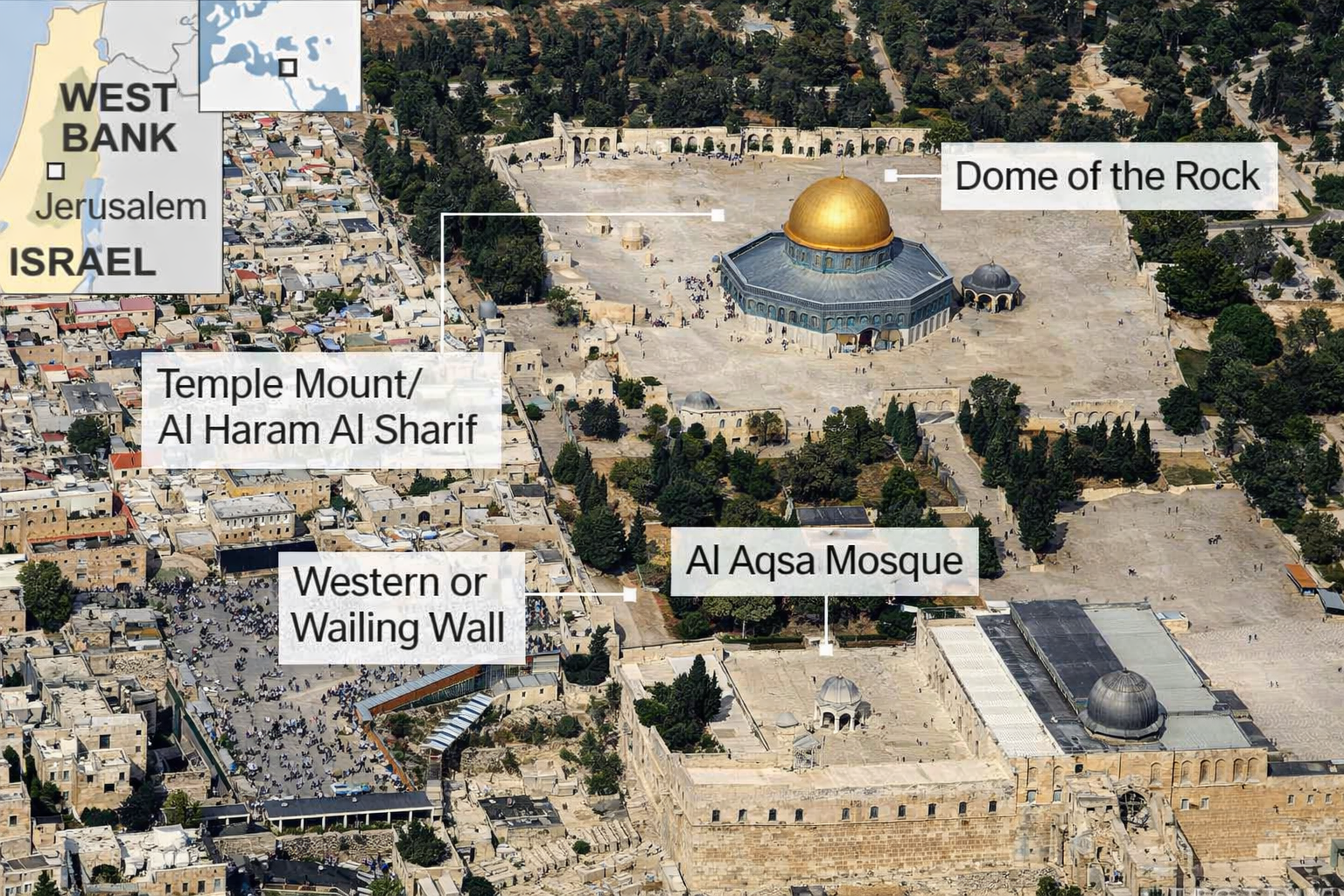
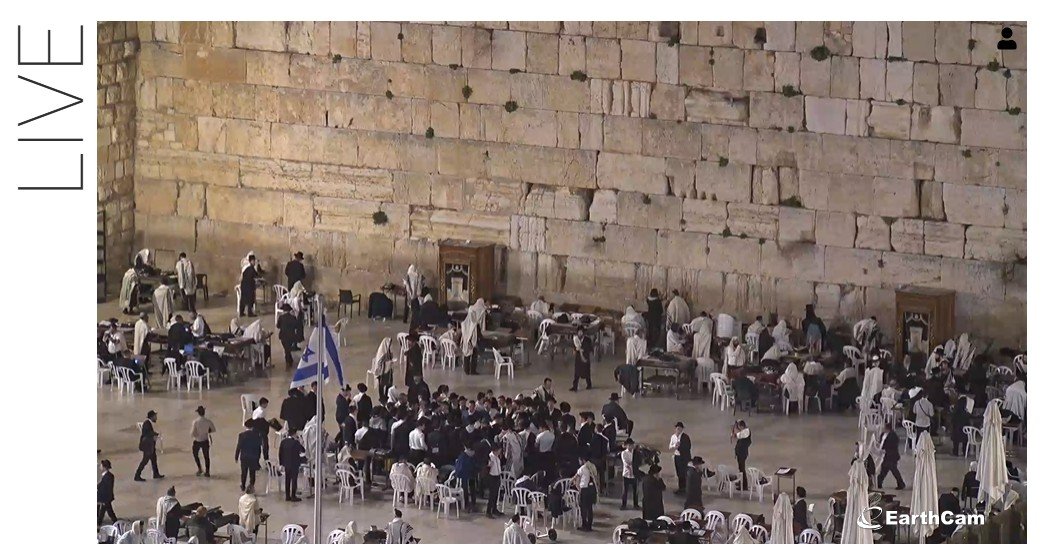
Worship at the Western Wall and Temple Mount will be taken away, according to Bible prophecy— (read The Warning for Jerusalem & Israel). The last generation of overcomers have God’s promise of the final unsealing of prophecy—including a more thorough understanding of final events that center around the mysterious 1,290 days and 1,335 days of Daniel 12, which says, “From the time that the daily [worship]... is abolished [at the Western Wall & Temple Mount] and the abomination that causes desolation is set up [on the Temple Mount], there will be 1,290 days. Blessed is the one who waits for and reaches the end of the 1,335 days.” In other words, a disastrous tragedy such as an earthquake (link) (link) (link) or war will soon stop daily worship at the Western Wall and Temple Mount.
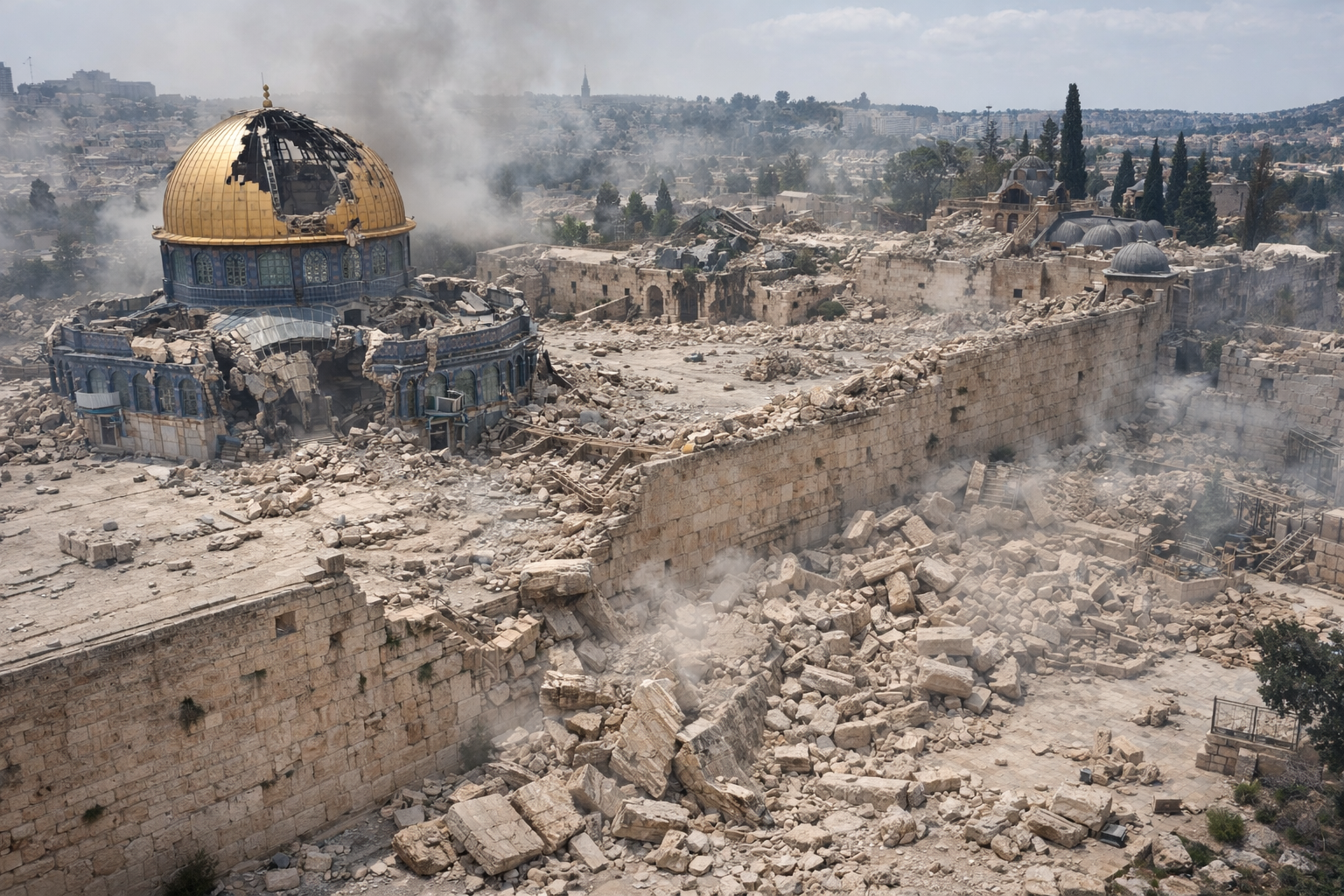
This is the decisive Jerusalem event that initiates the prophetic periods of the appointed time of the end. Jesus forewarned, “And great [destructive] earthquakes shall be in divers places, and famines, and pestilences; and fearful sights and great signs shall there be from heaven,” (Luke 21:11). And, “there will be... earthquakes in various places. All these are the beginning of birth pains,” (Matthew 24:7-8).
“Since the Arab Islamic foreign occupation of the land of Israel, Jerusalem, and the Temple Mount — after building the mosque and Dome of the Rock, it was a Jewish tradition that in the time of the redemption of Israel when the people of Israel again dwell in the land and the State of Israel is re-established, the G-d of Israel will cause a strong earthquake which will completely remove these foreign houses of pagan worship from the Temple Mount. The Temple Mount will be ready for the rebuilding for the building of the Third Temple... scientists stated that a very strong earthquake will occur in the coming future and the epicenter of the earthquake will be on the Temple Mount and the Old City.” — TempleMountFaithful.org
Soon after the Jerusalem disaster, international (Gentile) troops will enter the City (likely by invitation) in an attempt to restore order, trampling on Jerusalem for 42 months (1,260 days— Revelation 11:2). The greater part of the military forces will likely be European NATO troops. According to a survey in 2009, the majority of Israelis approve of a NATO presence in the West Bank (International Troops Bound for West Bank?), which western border runs through the City of Jerusalem. During the time of trouble that follows, the City of Jerusalem and Temple Mount with religious structures will be rebuilt (Daniel 9:25)... but this will only set the stage for the division and ultimate destruction of Jerusalem that culminates during the 40 day Great Tribulation, because Israel will allow Antichrist onto the Temple Mount to set up his idolatrous abomination.

Benjamin Netanyahu, on Jerusalem Day, May 22, 2009, said, “Unified Jerusalem is the capital of Israel. Jerusalem always has been and always will be ours and it will never be divided again... I stand here today… saying what I said in my visit to the US: Jerusalem will never be divided again. Only Israeli sovereignty over the city would ensure the freedom of religion for the three faiths, and it is the only thing that can guarantee that all minorities and congregations could continue living in it.”

A Brief History of Jerusalem
Source: Israel Ministry of Foreign Affairs, October 2007

King David made Jerusalem the capital of his kingdom and the religious center of the Jewish people in 1003 BCE. Some forty years later, his son Solomon built the Temple (the religious and national center of the people of Israel) and transformed the city into the prosperous capital of an empire extending from the Euphrates to Egypt.
Exiled by Babylonian king Nebuchadnezzar in 586 BCE, who conquered Jerusalem and destroyed the Temple, the Jews were allowed to return and rebuild the city and the Temple some 50 years later by the Persian King Cyrus.
Alexander the Great conquered Jerusalem in 332 BCE. The later desecration of the Temple and attempts to suppress Jewish religious identity under the Seleucid ruler Antiochus IV resulted in a revolt led by Judah Maccabbee, who rededicated the Temple (164 BCE) and re-established Jewish independence under the Hasmonean dynasty.
A century later, Pompey imposed Roman rule on Jerusalem. King Herod, installed as ruler of Judah by the Romans (37 - 4 BCE), established cultural institutions in Jerusalem, erected magnificent public buildings and refashioned the Temple into an edifice of splendor.
Jewish revolt against Rome broke out in 66 CE, as Roman rule after Herod's death became increasingly oppressive. In 70 CE, Roman legions under Titus conquered the city and destroyed the Temple. Jewish independence was briefly restored during the Bar Kochba revolt (132-135), but again the Romans prevailed. Jews were forbidden to enter the city, renamed Aelia Capitolina.
After Byzantine conquest of the city (313), Jerusalem was transformed into a Christian center under Emperor Constantine, with the Church of the Holy Sepulcher the first of many grandiose structures built in the city.
Muslim armies invaded the country in 634, and four years later Caliph Omar captured Jerusalem. Only during the reign of Abdul Malik, who built the Dome of the Rock (691), did Jerusalem briefly become the seat of a caliph.
The Crusaders conquered Jerusalem in 1099, massacred its Jewish and Muslim inhabitants, and established the city as the capital of the Crusader. Synagogues were destroyed, old churches were rebuilt and many mosques were turned into Christian shrines. Crusader rule over Jerusalem ended in 1187, when the city fell to Saladin.
In 1247 Jerusalem fell once more to Egypt, now ruled by the Mamluks, until the conquest by the Ottoman Turks in 1517. Suleiman the Magnificent rebuilt the city walls (1537). After his death, the central authorities in Constantinople took little interest in Jerusalem and the city declined.
Jerusalem began to thrive once more in the latter half of the 19th century. Growing numbers of Jews returning to their land, waning Ottoman power and revitalized European interest in the Holy Land led to renewed development of Jerusalem.
The British army led by General Allenby conquered Jerusalem in [November] 1917. From 1922 to 1948, Jerusalem was the administrative seat of the British authorities in the Land of Israel (Palestine), which had been entrusted to Great Britain by the League of Nations.
Upon termination of the British Mandate on May 14, 1948, and in accordance with the UN resolution of November 29, 1947, Israel proclaimed its independence, with Jerusalem as its capital. Opposing its establishment, the Arab countries launched an all-out assault on the new state, resulting in the 1948-49 War of Independence. The armistice lines drawn at the end of the war divided Jerusalem into two, with Jordan occupying the Old City and areas to the north and south, and Israel retaining the western and southern parts of the city.
When the Six-Day War broke out in June 1967 Israel contacted Jordan through the UN as well as the American Embassy, and made it clear that if Jordan refrained from attacking Israel, Israel would not attack Jordan. Nevertheless, the Jordanians attacked west Jerusalem and occupied the former High Commissioner's building. Following heavy fighting, the IDF recovered the compound and removed the Jordanian army from east Jerusalem, resulting in the reunification of the city.
After the liberation of the city by the IDF, the walls dividing the city were torn down. Three weeks later, the Knesset enacted legislation unifying the city and extending Israeli sovereignty over the eastern part of the city.
The reunification of the city was also a fundamental moment in the history of religious tolerance, opening the city of Jerusalem to worshippers of all faiths, permitting Jews to return to the Western Wall and other holy sites, and allowing Israeli Muslims and Christians to visit those sacred places in eastern Jerusalem from which they too had been barred since 1948.
One year later, in 1968, it was decided that the day marking the liberation and reunification of Jerusalem—28 Iyar according to the Jewish lunar calendar—would be a national holiday in Israel. On Jerusalem Day we celebrate the reunification of the city and the Jewish people's connection with Jerusalem throughout the ages.
Jerusalem: City of Three Religions
Judaism, Christianity, & Islam
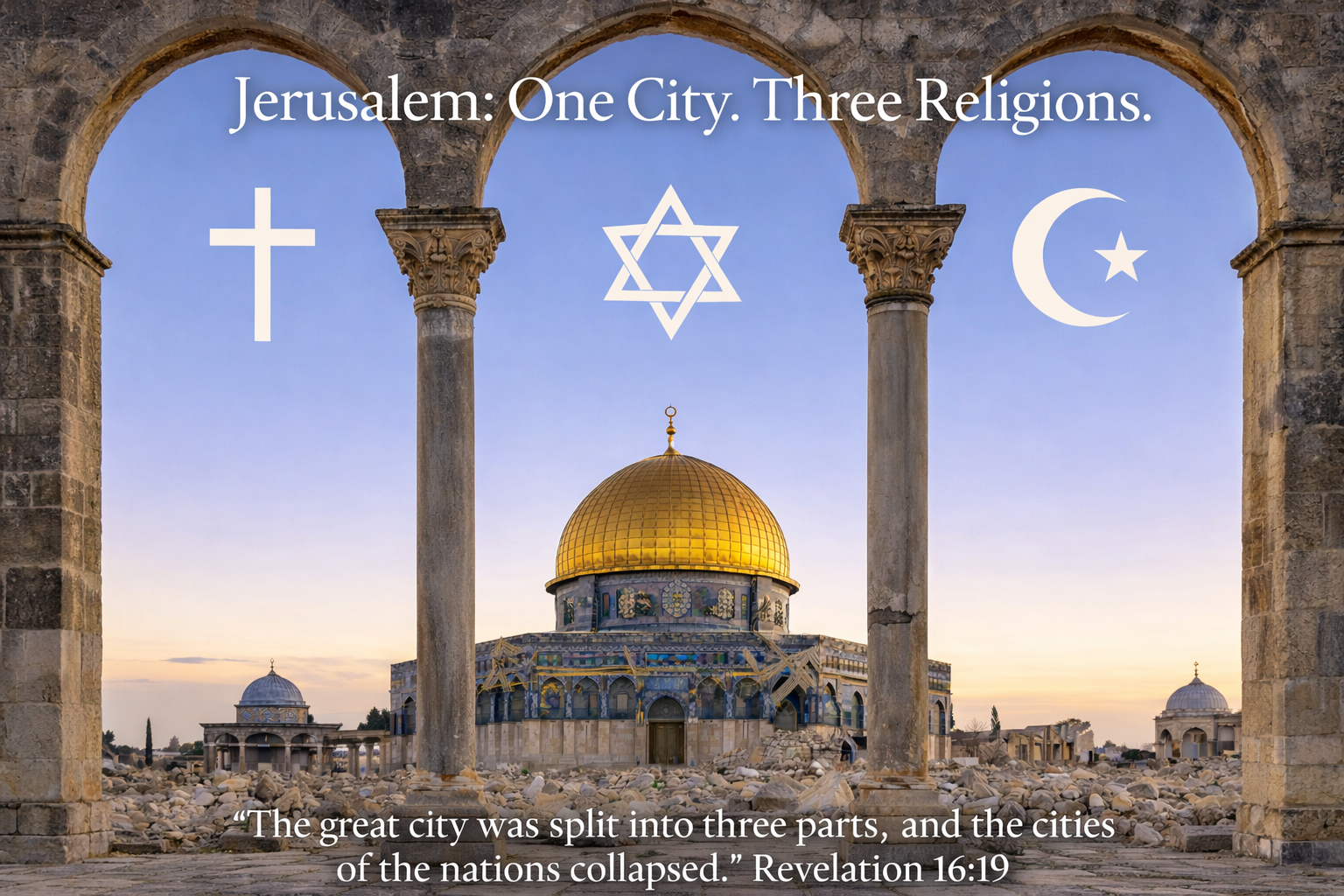
The city of Jerusalem is considered hallowed by three different religions of Abraham’s descent: Judaism, Christianity, and Islam. The 2000 Statistical Yearbook of Jerusalem listed 1,204 synagogues, 158 churches, and 73 mosques within the city. Jerusalem has been sacred to the Jews since King David proclaimed it his capital in the 10th century BCE. Christianity reveres Jerusalem not only for its Old Testament history but also for its significance in the life of Jesus. According to the New Testament, Jesus was brought to Jerusalem soon after His birth and later in His life cleansed the Second Temple, then died there. Jerusalem is also considered the third-holiest city in Islam, before the focus was permanently switched to the Kabaa in Mecca.
In 1949, at the end of the first Arab-Israeli War, Jerusalem was divided between Israel and Jordan. In 1967, Israel took control of the entire city. Jerusalem was officially proclaimed the capital of Israel in 1980. Today, Jews make up about 75% of the population in Jerusalem and Arabs about 20%, and both Hebrew and Arabic are spoken.
Jerusalem is divided into three sections: the Old City, the New City (West Jerusalem), and East Jerusalem. The Old City was under Jordanian control from 1949 to 1967. During this time, the Jordanians destroyed the Jewish quarter, but today it has been restored. The New City, built mostly by Jews, has developed greatly since the 19th century. East Jerusalem, just north of the Old City, is considered the modern Arab section. The walled Old City in the center contains Muslim, Jewish, Christian, and Armenian quarters.
Judaism

For Jews, Jerusalem is the site of their ancient Temple and historical heritage. Jews worship primarily at the Wailing Wall, the only remaining portion of the original wall of King Solomon’s Temple. After the Jews were banished from the Temple Mount, the Western Wall became their most revered place of worship. Just above the wall is the Dome of the Rock, where Muslims worship. Increasing numbers of Jews now ascend the Temple Mount as a form of worship and solidarity, in hope that someday it will become a place of worship for all nations.
Christianity

Christianity’s most notable site of worship is the Church of the Holy Sepulcher. Established in the 4th century AD and rebuilt by the Crusaders beginning in 1099, the church is believed to stand on Calvary (Golgotha), where Jesus was crucified. For Christians, Jerusalem is the site of many events in the life of Jesus Christ and His followers and is therefore revered as holy—the Mountain of God.
Islam

Muslims worship at the Dome of the Rock, also known as the Mosque of Omar, located on the Temple Mount. This gold-domed mosque was built around 691 AD. For Muslims, Jerusalem is the third-holiest city because it is believed to be the site from which Muhammad ascended to heaven.
The End-Time Destruction of Jerusalem

Although not understood by the three monolithic religions, Jerusalem will experience great destruction through a major earthquake, which will likely bring down the mosques on the Temple Mount and initiate the counting days of Daniel’s prophecies. A decree will later be proclaimed to “rebuild and restore” the city, opening the door for the construction of the Third Temple. However, at the end of the counting periods, Messiah will stand on the Mount of Olives and split apart the Great City with an even greater earthquake than the one that began the end-times (Matthew 24:2). Beginning with Jerusalem, He will bring an end to powerful cities and corrupt governments worldwide, and the schemes of Satan will fail.
Revelation 16 describes this final Jerusalem earthquake: “The seventh angel poured out his bowl into the air, and out of the temple came a loud voice from the throne, saying, ‘It is done!’ Then there came flashes of lightning, rumblings, peals of thunder, and a severe earthquake. No earthquake like it has ever occurred since mankind has been on earth, so tremendous was the quake. The Great City split into three parts, and the cities of the nations collapsed” (Revelation 16:17–19).
Zechariah also foretold: “Then the LORD will go out and fight against those nations, as he fights on a day of battle. On that day his feet will stand on the Mount of Olives, east of Jerusalem, and the Mount of Olives will be split in two from east to west, forming a great valley… You will flee, as you fled from the earthquake in the days of Uzziah king of Judah” (Zechariah 14:3–5). After this, fire will consume Babylon the Great (Revelation 19), and in its place Messiah has prepared a home for His people—the New Jerusalem.